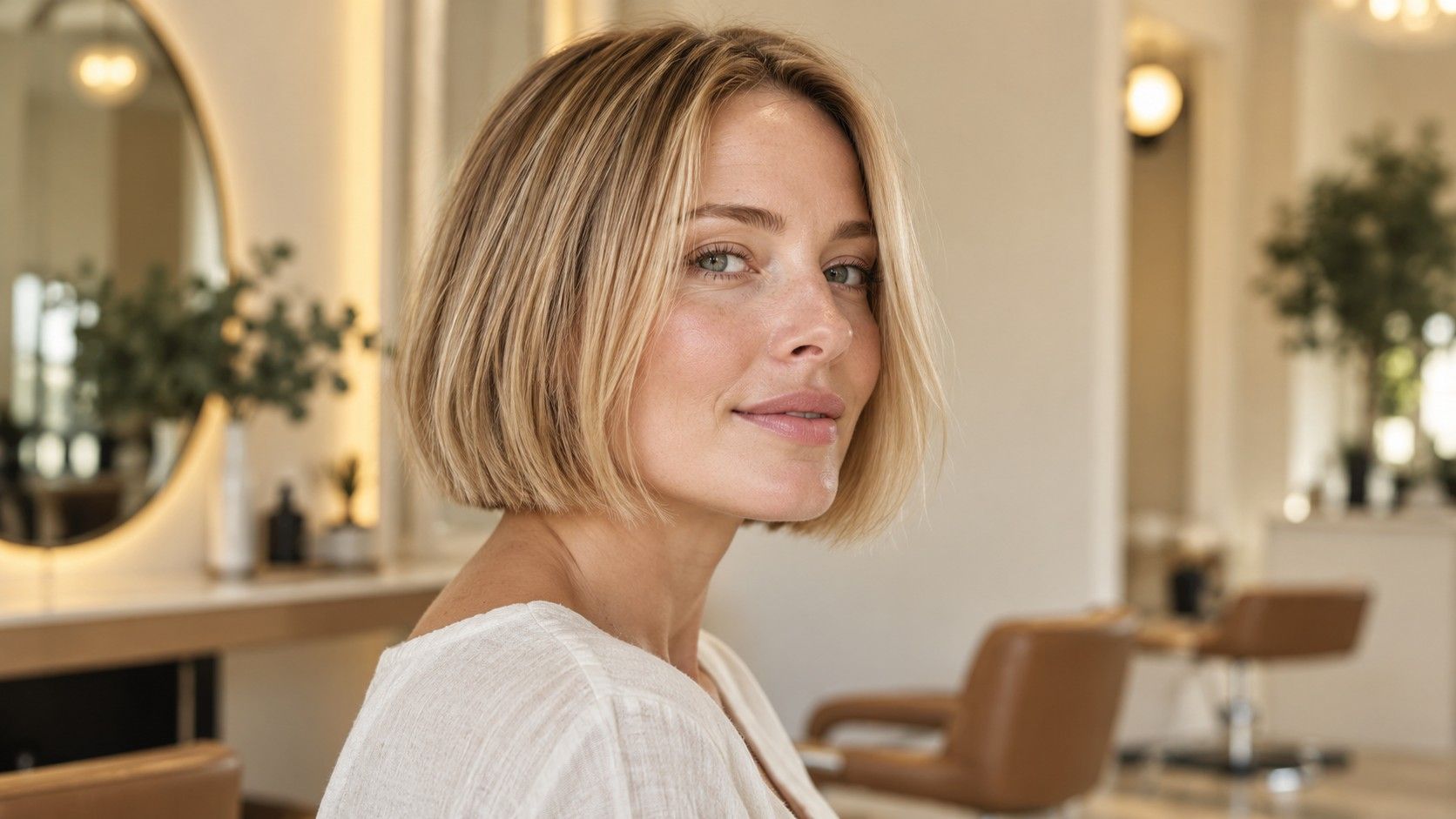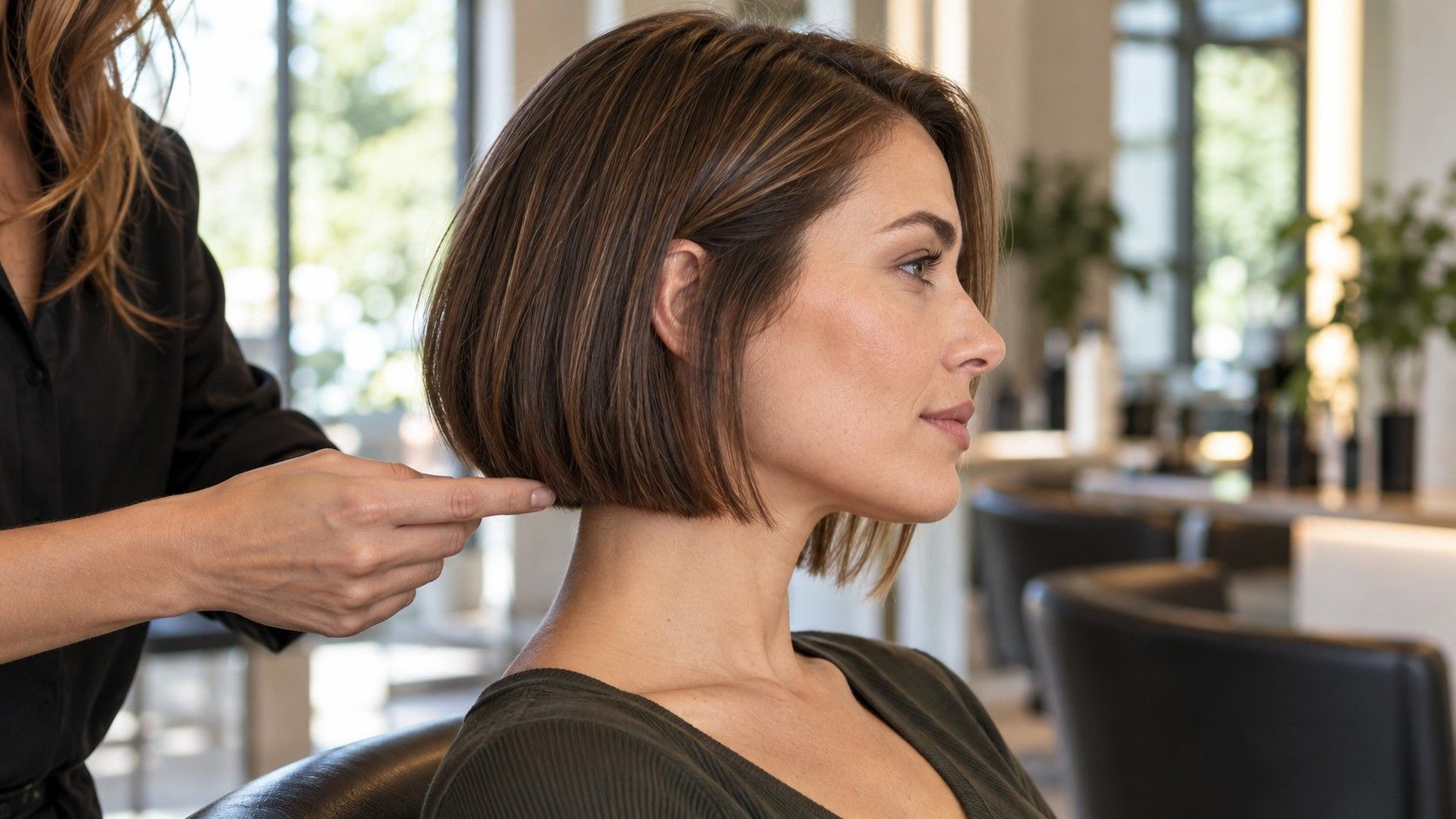
The difference between a bob you enjoy and one you keep pinning away can be a small change in length. A photograph shows where the ends sit for one person, in one pose, after styling. Your cut has to survive a coat collar, a quick morning wash and the way your hair bends when you leave it alone. Choose the position of the finished, dry ends first; the name of the bob can come later.
Start with the hair you need to move out of your way
Before comparing bob haircut lengths, decide what you need your hair to do on an ordinary day. If you tie it back to cook, exercise or work, check which sections must reach the fastening. Front pieces often fall out long before the back does. A collarbone bob may allow a small ponytail, but an angled cut with a shorter nape can leave loose hair at the bottom. Ask to test that reach during the consultation instead of assuming every long bob will tie up.
Glasses, earphones and habitual ear-tucking also matter. Tuck your current hair behind both ears and look at the front sections from the side. A jaw-length piece might sit neatly in place while still, then spring forward as you turn your head. If you dislike hair touching your cheeks, tell the stylist before choosing a short front edge. A few discreet pins may be an acceptable compromise; needing them every morning may change the length you choose.
Be honest about styling time. A polished short bob can need a deliberate drying direction around the temples and nape, even when the rest dries quickly. A longer cut may give you more room for an easy bend but take longer to dry. The useful question is what finish you want after your usual routine, including the days when a round brush stays in the drawer.
Find the bend before deciding where to cut
Look at your hair dry, with the parting you normally wear and without pulling the ends straight. Notice where waves begin, whether one side kicks outward and whether the nape grows upward or sideways. Cutting into a bend changes where the ends land. A photograph taken after a blow-dry cannot tell you how that same line will behave after air-drying, so bring a second picture of your own hair on an ordinary day.
Shoulder clearance deserves a separate check. Ends that touch the shoulders or a high collar can turn outward as you move; this may be exactly the relaxed shape you want. If you want a hanging, inward-looking edge, ask whether the proposed length clears your shoulders in your normal posture. Lift and lower your chin, then turn to either side. There is no single measurement that gives everyone the same clearance because neck length, shoulder slope and posture vary.
For wavy or curly hair, show how you normally define the texture. Drying with a diffuser, stretching with a brush and leaving hair untouched can produce different apparent lengths. A temporary fold-under preview is useful for proportion, but folded hair carries extra bulk and may hide the way the ends curl. Treat it as a rough sketch and let the stylist inspect the texture loose.
Compare the landing points, not just the labels
Jaw-length, chin-length and long bob are loose descriptions. Your jawline and chin are not necessarily at the same horizontal level, and the front and back can be cut to different positions. Use the table as a conversation starter, then point to the exact place you want the dry ends to reach. A side-view reference is often more useful than another front-facing selfie.
| Landing point | What to check | Possible compromise |
|---|---|---|
| Near the jaw | Ear-tucking, cheek contact and visible nape | Leave the front slightly longer if you need it to stay back |
| Near the chin | Where the ends meet your natural wave | Adjust the line above or below a strong bend |
| Between chin and shoulder | Clearance when turning your head | Accept a flick or choose a line that hangs freely |
| Near the collarbone | Ponytail reach and contact with clothing | Keep enough length at the nape for your fastening |
A shorter line exposes more of the neck and makes small changes at the perimeter easier to notice. A collarbone length leaves more hair to move, tuck and bend, though it may still need shaping to avoid a heavy triangle. Neither choice automatically creates volume or makes a face look a prescribed way. Look at the balance you enjoy: where the widest part of the hair sits, how much neck shows and whether the front feels comfortable.
If two lengths both appeal, compare them using the same parting and finish. A sleek chin bob and a curled long bob are showing two changes at once. Save references with similar textures, then identify the single detail you prefer in each: the front landing point, the nape coverage or the amount of movement. This gives the stylist something more useful than a folder of unrelated cuts.
Leave room for shrinkage and the hair at the nape
Wet length is a poor substitute for finished length when hair contracts as it dries. Ask the stylist to assess shrinkage using your own curl or wave pattern. There is no reliable universal allowance in centimetres, and different sections can behave differently. The front may stretch under its own weight while a tighter nape curl sits much higher once released. Agree on the shortest acceptable dry position before cutting begins.
At the back, a low hairline or upward-growing section can affect how a crisp edge sits. Ask to see the proposed nape in a mirror and discuss whether the plan involves clipping, an undercut or simply leaving coverage. Those are different commitments. Removing hidden bulk may help a particular shape, but it can also change the feel of the cut when you tie it up and introduce a separate grow-out stage.
Neck movement changes the outline too. Check the cut with your head upright rather than permanently tilted down, and look again after your hair has settled. A precise line does not have to appear ruler-straight through every movement. What matters is whether it returns to a shape you like without constant rearranging, especially around a stubborn crown or nape growth pattern.
Make the salon agreement specific enough to check
Try a sentence such as: “I want the front to sit just below my chin when dry, with enough back length to cover my hairline, and I usually air-dry.” Then add your practical limit: you need a ponytail, you tuck one side, or you will spend a few minutes blow-drying the front. Ask the stylist to point out where the shortest section will end. This is clearer than asking for a French bob or lob and hoping you share the same picture.
Bring a small set of references and say what you do not want as plainly as what you like. “I like this perimeter, but I do not want the very short back” separates useful information from the rest of a photograph. Ask how the chosen line will look with your natural parting and whether the shape depends on a daily smooth blow-dry. A virtual preview can help you compare proportions, but it cannot establish density, growth direction or a reliable dry length.
If the change feels large, you can agree on a longer first landing point and reassess once it is dry. That does not mean treating the appointment as unlimited rounds of cutting; discuss the approach and timing with the stylist. Before leaving, move your head, tuck the sides and try your normal fastening if it still reaches. The best length is one you can recognise in the mirror after those small, ordinary movements.
Also check your wardrobe: a scarf, hood or raised jacket collar can push the back forward. You do not need to design a haircut around one coat, but frequent contact explains why an otherwise tidy line may change shape during the day.